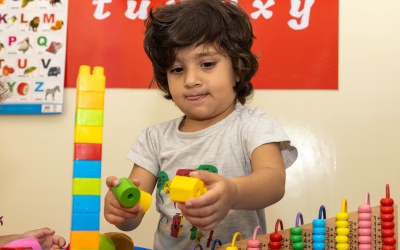
As parents, one of our deepest wishes is to see our children grow into kind, confident, and socially aware individuals. While families lay the foundation of love and values, a child’s ability to interact, share, and collaborate with others often blossoms outside the home. This is where day care centers play a crucial role.
In today’s world, where nuclear families and working parents are the norm, day care centers have become more than just safe spaces for children while parents are away. They have evolved into hubs of social development that forms little ecosystems where children learn the basics of human interaction long before they step into formal schooling.
Why Do Social Skills Matter Early On?
Social skills are not just about “making friends.” They’re about learning empathy, patience, communication, teamwork, and the ability to handle conflicts.
Research shows that children who develop stronger social skills early on are more likely to:
- Perform well academically
- Enjoy better mental health
- Build stronger relationships as adults
In this regard, day care becomes the first real-world classroom for these vital life lessons.
Can Sharing a Toy Truck Teach Leadership?
Three-year-old Aarav loved the red toy truck at his day care. He wouldn’t let it go. One morning, another child, Meera, reached out for the same truck, and Aarav burst into tears.
Instead of scolding him, the caregiver gently explained, “Meera will play for two minutes, then you can have it back.” Within weeks, Aarav learned that sharing did not mean losing. He discovered joy in waiting his turn, a skill that many adults still struggle with.
Takeaway: Day care creates daily micro-opportunities where children learn to share resources, time, and attention.
How Do Kids Learn Conflict Resolution?
At another of our Feather Touch Day Care centers, a group of five-year-olds was building a block tower. Just as the tower grew tall, one child accidentally knocked it over. Tempers flared; voices rose.
The teacher calmly guided them into a conversation: “What can we do differently next time so the tower stands stronger?” The children brainstormed, rebuilt the tower together, and even laughed about the accident.
Takeaway: Instead of suppressing conflicts, day care environments encourage children to face them, find solutions, and move on without grudges. That’s emotional intelligence in action.
What About Shy Kids? Do They Get Left Behind?
Four-year-old Kabir was shy and spoke very little. Most of his peers were more outgoing, and initially, he felt left out. His caregivers, however, encouraged group storytelling sessions where every child had a chance to add one sentence to a collective story.
Slowly, Kabir started contributing, first with a word, then a phrase, and eventually full sentences. His confidence grew, and the other children learned how to be patient listeners and give him the space.
Takeaway: Day care provides inclusive platforms where quieter or slower-to-adjust children find their voice, while peers learn patience and acceptance.
How Exactly Does Day Care Nurture Social Skills?
The magic lies not in grand activities but in everyday interactions:
- Structured Play: Games and role play teach cooperation and healthy competition.
- Routine and Rules: Lining up, waiting for snacks, or cleaning up after play fosters discipline and respect.
- Celebrations: Birthdays and festivals teach diversity, generosity, and shared joy.
- Language Growth: Talking with peers sharpens communication and listening skills.
- Emotional Coaching: Caregivers help kids name emotions and express them constructively.
What Do Parents Notice at Home?
Parents often see the ripple effects of day care in everyday life.
- A mother said: “My daughter started reminding me to say ‘please’ and ‘thank you’ after just three months at day care.”
- A father shared: “Earlier my son clung to me at every party. Now he introduces himself and plays with other kids without hesitation.”
These are not small wins; they’re glimpses of the social confidence that becomes a lifelong strength.
Doesn’t It Replace Family Bonding?
Some parents worry: “Will my child miss out on family time or get too dependent on peers?” The reality is that day-care complements, not replaces, family influence. Home nurtures love and values, while day care provides a safe rehearsal stage for the “real world.”
In fact, children who balance both environments often grow into more adaptable, confident, and socially aware individuals.
Final Thoughts: Why Day Care is More Than Convenience?
Day care is not just about keeping children occupied until parents return from work. It’s about planting the seeds of social intelligence early on.
From sharing toys to resolving conflicts and embracing differences, the lessons learned in day care ripple through school years, workplaces, and personal relationships later in life.
When parents choose a day care, they’re not just choosing convenience, they’re choosing a social learning environment that shapes their child’s ability to connect, empathize, and thrive in a community.
After all at the end of the day, academics and achievements may open doors, but it is social skills that keep those doors open.
Feathertouch Daycare helps corporates in Bengaluru set up compliant, high-quality crèche facilities — fully aligned with the Labour Codes.
Talk to us about crèche compliance →